Beautiful Plants For Your Interior
Beautiful Plants For Your Interior
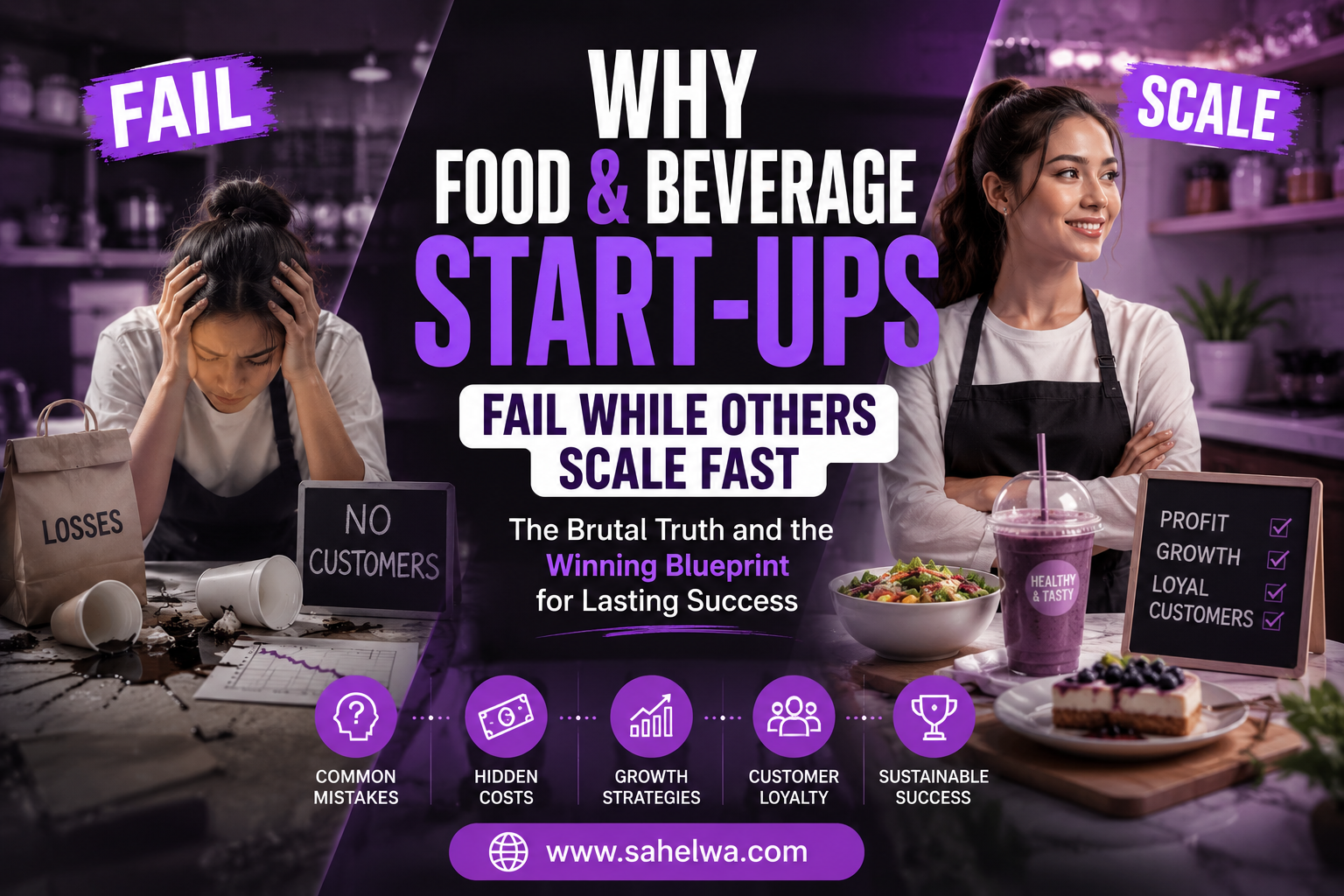
The Silent Collapse of Most Food and Beverage Start-ups
Every year, thousands of food and beverage start-ups launch with passion, recipes, and dreams of disruption. Yet most disappear within the first 18–36 months. Not because the food is bad. Not because the idea is weak. But because execution, positioning, and scalability are misunderstood from day one.
The industry is emotionally driven but operationally unforgiving. Taste alone does not build a business. Branding alone does not retain customers. And trends alone do not create longevity.
The harsh reality is this: the market does not reward the best product. It rewards the best system.
The Real Reasons Most Start-ups Fail (And Rarely Admit)
Customers don’t remember ingredients. They remember identity. Start-ups that survive build emotional positioning—comfort, status, nostalgia, health transformation, or cultural pride.
If your brand cannot be described in one emotional sentence, it will struggle to scale.
Trying to serve everyone is the fastest route to becoming invisible. Successful brands dominate a niche first, then expand outward.
You don’t need a bigger menu. You need a sharper identity.
High engagement on social media means nothing if:
Cost per plate is miscalculated
Delivery margins are ignored
Customer acquisition cost exceeds lifetime value
Most start-ups scale loss, not profit.
Survival is not about first-time buyers. It is about repeat behavior.
If customers do not return within 7–14 days, your product is entertainment—not a habit.
Great branding collapses under poor consistency:
taste variation
delayed delivery
inconsistent packaging
inventory mismanagement
In food business, consistency is currency.
What Successful Food & Beverage Start-ups Do Differently
Winning brands design:
repeatable kitchen processes
standardized recipes
scalable supply chains
predictable margins
They think like operators, not just creators.
Instead of opening and hoping customers arrive, they validate demand through:
pre-launch waitlists
influencer sampling
limited drops
hyperlocal targeting
Demand is created, not discovered.
Strong brands use:
scarcity (limited drops, seasonal menus)
identity marketing (healthy lifestyle, premium indulgence, cultural pride)
sensory branding (packaging, smell, color psychology)
People don’t just buy food. They buy how it makes them feel about themselves.
Smart F&B brands build retention engines:
loyalty rewards
subscription meals
personalized offers
WhatsApp or app-based reordering systems
The goal is not one sale. It is habit formation.
Instead of expanding too early, successful brands:
dominate one geography
perfect operations
stabilize cash flow
then replicate the model
Scaling chaos is the fastest way to collapse.
The Hidden Growth Formula Nobody Talks About
The most successful food and beverage start-ups follow a simple but powerful formula:
Emotional Branding + Operational Precision + Repeat Purchase System + Controlled Scaling = Sustainable Growth
Miss one, and the structure weakens. Ignore two, and the business breaks.
The Urgency Most Founders Ignore
Time is not neutral in this industry.
Competitors copy faster than you can innovate
Customer attention shifts in days, not months
Delivery platforms reward consistency, not creativity
Capital drains faster than founders expect
Every delay in fixing fundamentals compounds risk.
The difference between success and failure is rarely the idea. It is speed of correction.
Action Blueprint: How to Build a Winning Food & Beverage Start-up
If you are starting or scaling, focus on this sequence:
Define a single emotional positioning (not a menu, a message)
Validate demand before full launch
Control unit economics from day one
Build repeat purchase systems early
Standardize operations before expansion
Scale only after consistent profitability in one zone
This is not theory. This is survival logic.
Final Thought
Food and beverage success is not about cooking better than others. It is about building a system that survives pressure, competition, and time.
Most brands fail quietly. A few dominate loudly. The difference is rarely talent. It is discipline disguised as strategy.